
Remodeling a home is exciting, but it can also feel overwhelming when you start adding up contractor quotes. The good news is that plenty of projects genuinely belong in your own hands, saving you real money without putting your house or your safety at risk. The trick is knowing where the line sits between confident weekend work and jobs that need a licensed specialist.
Homeowners are more willing than ever to pick up a paintbrush or a wrench. According to Ruby Home, 75% of homeowners attempt some sort of DIY project, with saving money being the biggest reason most pick up the tools in the first place. That enthusiasm pays off when it’s paired with a realistic look at your skill level, your schedule, and the tools you already own.
This walkthrough is built to help you figure out which remodeling jobs you can tackle on your own, how to prep for each one, and when to put the drill down and call someone. Follow it step by step, and you’ll finish your project with fewer surprises, a lighter bill, and a house you’re genuinely proud of.
How to Decide What Belongs on Your To-Do List
Before you buy a single tool, sort your project list into two columns: tasks that are low-risk and reversible, and tasks that involve structural, electrical, plumbing, or permit issues. Anything in the first column is fair game for a motivated homeowner. Anything in the second column should at least get a professional consultation.
Start by walking through each room with a notepad. Write down every change you want to make, then rank each item by three things: how much damage you could do if you mess it up, whether a mistake could hurt someone, and whether the fix requires inspection. A new coat of paint ranks low on all three. Rewiring a panel ranks high. Be honest here, because this ranking is what protects your wallet and your safety.
Setting a Realistic Scope
It’s tempting to say yes to everything. Resist that. Pick three or four tasks for your first wave, finish them completely, and then move on to the next batch. Momentum is a better motivator than an unfinished kitchen sitting there for six months.
Painting, Patching, and Surface Refreshes

Paint is the single highest-impact project you can do yourself. A room can look totally renovated after two coats and a weekend. The skills involved are forgiving, the materials are cheap, and mistakes wipe off with a damp rag if you catch them fast enough.
Before you start, patch every nail hole and hairline crack with lightweight spackle, sand it smooth, and wipe the walls down. Tape your trim carefully, prime any stains, and use a quality roller. Cheap rollers shed fibers into your finish and make everything look fuzzy. Give each coat proper dry time instead of rushing the second pass.
Here are surface-level jobs almost any homeowner can handle confidently:
- Interior wall and ceiling painting
- Patching small drywall holes and dents
- Refreshing trim, baseboards, and interior doors
- Hanging wallpaper or peel-and-stick panels
- Staining or resealing an existing deck
- Touching up scuffed cabinet faces
According to Today’s Homeowner, some of the most DIY-friendly home improvement projects include indoor painting, wallpapering, and updating kitchen fixtures. These projects transform a space quickly and rarely create a situation you can’t reverse with a second try.
Swapping Out Fixtures and Hardware
Replacing dated fixtures is one of the easiest ways to modernize a room without demolition. Cabinet pulls, faucets, light fixtures, switch plates, towel bars, and even toilets can be swapped in an afternoon with basic tools. The result looks like a much larger upgrade than it actually is.
Shut off the water or flip the breaker before you start anything involving pipes or wires. For faucets, take a picture of the old connections before you disconnect so you can match them later. For light fixtures, test the wires with a non-contact voltage tester even after you’ve killed the breaker. Little habits like these prevent the small percentage of DIY projects that end in a bigger bill than hiring out would have cost.
When You Should Still Call a Licensed Trade
Fixture swaps are safe. Running new circuits, moving supply lines, or vent stacks is not. If you open a wall and find knob-and-tube wiring, galvanized pipe, or anything you don’t recognize, stop. Call a pro, get it looked at, and keep the easy stuff for yourself. This is how smart homeowners make home remodeling ideas on a budget actually work without creating expensive fallout.
Making the DIY or Hire a Pro Decision
Every project sits somewhere on a spectrum from “weekend win” to “call someone today.” The question of DIY vs. Pro comes down to four honest factors: skill, time, safety, and the permit requirement in your city. Score each project on those factors before you commit.
If you’ve never done the task before, add a full day to whatever YouTube says it takes. If the job involves gas, structural load, main electrical, or roof work above a single story, default to a licensed trade. Angi’s 2025 data shows that a full renovation for homes between 1,250 and 1,600 square feet averaged $52,275, so even trimming a few hundred dollars per task adds up meaningfully across a whole house.
Use this quick filter when you’re on the fence:
- Would a mistake cause a water leak inside a wall?
- Does the task require pulling a permit?
- Could an error injure someone in the house?
- Will the work be inspected by the city?
- Does it involve load-bearing walls or roofing?
If you answered yes to any of those, hire it out. If you answered no to all of them, it’s likely yours to handle. For a deeper look at how this fits into the broader plan, the 30-day planning blueprint breaks down timelines and budgeting in a way that pairs well with this filter.
Flooring, Tile, and Finish Work You Can Tackle
Click-together flooring has changed what the average homeowner can reasonably install. Luxury vinyl plank, laminate, and engineered wood snap together over a foam underlayment without nails or glue. If you can measure carefully and cut straight, you can floor a room in a weekend.
The prep work matters more than the install. Pull your baseboards instead of cutting around them, acclimate the planks in the room for 48 hours, and check your subfloor for dips with a long level. A floor that fails usually fails because someone skipped the prep, not because the product was bad. Rent a tapping block and a pull bar from the hardware store rather than fighting the install with a hammer.
Tile backsplashes are another strong project for a patient first-timer. Start with peel-and-stick tile if you’re nervous, then move up to real ceramic or glass mosaic once you’ve felt the rhythm of spacing and grout. Keep your first attempt small, like the strip behind a bathroom vanity, before taking on a full kitchen wall.
For trim and finish carpentry, a miter saw and a nail gun open up quick-return projects like crown molding, shoe molding, and window casing. Measure twice, cut once is a cliché because it’s true. Buy ten percent more material than you think you need so one bad cut doesn’t stop the whole job.
Small Carpentry Projects Worth Trying
Built-in shelves, floating shelves, and closet organizers all reward basic woodworking skills without demanding a workshop. A stud finder, a level, and a drill will cover most of what you need. If a shelf has to hold more than books, anchor into studs rather than relying on drywall anchors alone.
- Installing floating shelves in a living room or office
- Building a simple closet system from pre-cut kits
- Adding a window seat with storage underneath
- Replacing interior door knobs and hinges
- Installing a new mailbox or house numbers
Outdoor and Curb Appeal Projects
The yard is where sweat equity pays off fastest. Mulching beds, planting shrubs, pressure washing siding, and painting a front door can completely change how a house reads from the street. None of it requires a permit, and the worst-case outcome is usually just redoing the work.
Pressure washers are rentable by the day and will strip years of grime off concrete, fences, and vinyl siding. Keep the nozzle moving and hold it a steady distance from any surface so you don’t etch lines into softer materials. Test on a hidden area first. The same goes for deck stain, driveway sealer, and exterior paint.
Building a raised garden bed, laying a paver walkway, or installing landscape lighting are all within reach of a weekend warrior. Low-voltage lighting kits plug into a standard outlet through a transformer, so there’s no wiring risk involved. Pavers are heavier work, but the technique is straightforward once you’ve leveled and tamped a proper base.
Demolition You Can Safely Do Yourself
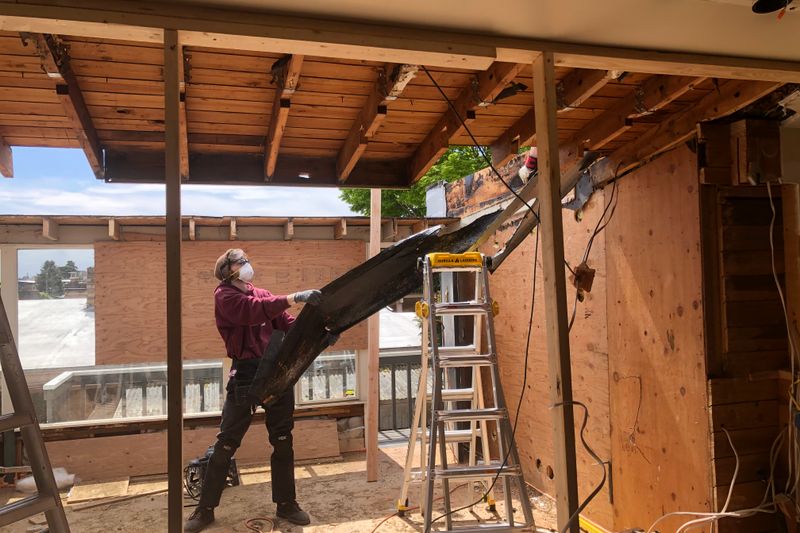
Swinging a hammer feels great, and controlled demo is one area where homeowners can genuinely save a contractor bill. Pulling up old carpet, removing dated vanities, taking down non-load-bearing cabinets, and ripping out worn-out tile are all reasonable solo tasks. Just confirm that the wall or structure you’re attacking isn’t holding something up and isn’t hiding active wires or pipes.
Wear real protective gear. Safety glasses, a dust mask rated for renovation work, gloves, and closed-toe boots are not optional. Old homes can contain lead paint or asbestos in flooring and popcorn ceilings, so if your house was built before 1980, get materials tested before you start tearing into them. That one phone call can save you from a six-figure mistake.
Bag debris as you go rather than letting it pile up. Rent a small dumpster if the project is bigger than a pickup truckload. A clean workspace is a safer workspace, and it keeps the rest of the house livable while the project is underway.
Conclusion
Taking on remodeling work yourself is one of the most satisfying parts of owning a home. Every patched wall, swapped faucet, and freshly painted room becomes a small story you get to tell later. The savings are real, but the confidence you build project after project is what keeps homeowners coming back to the toolbox instead of the phone.
The homeowners who succeed at this are the ones who stay honest about their limits. They tackle the paint, the hardware, the flooring, and the curb appeal, and they bring in a licensed pro for anything involving gas, structural changes, or main electrical. That balance is what separates a renovation that feels empowering from one that drains a bank account.
Start with one room, finish it completely, and let that first win set the tone for everything that comes after. Your house doesn’t need to be transformed overnight. It needs steady, careful work from someone who cares about the outcome, and that someone is already standing in it.